
Snitchnotes Team
Aerobic vs Anaerobic Respiration: Differences and Examples
Aerobic vs Anaerobic Respiration: Differences and Examples
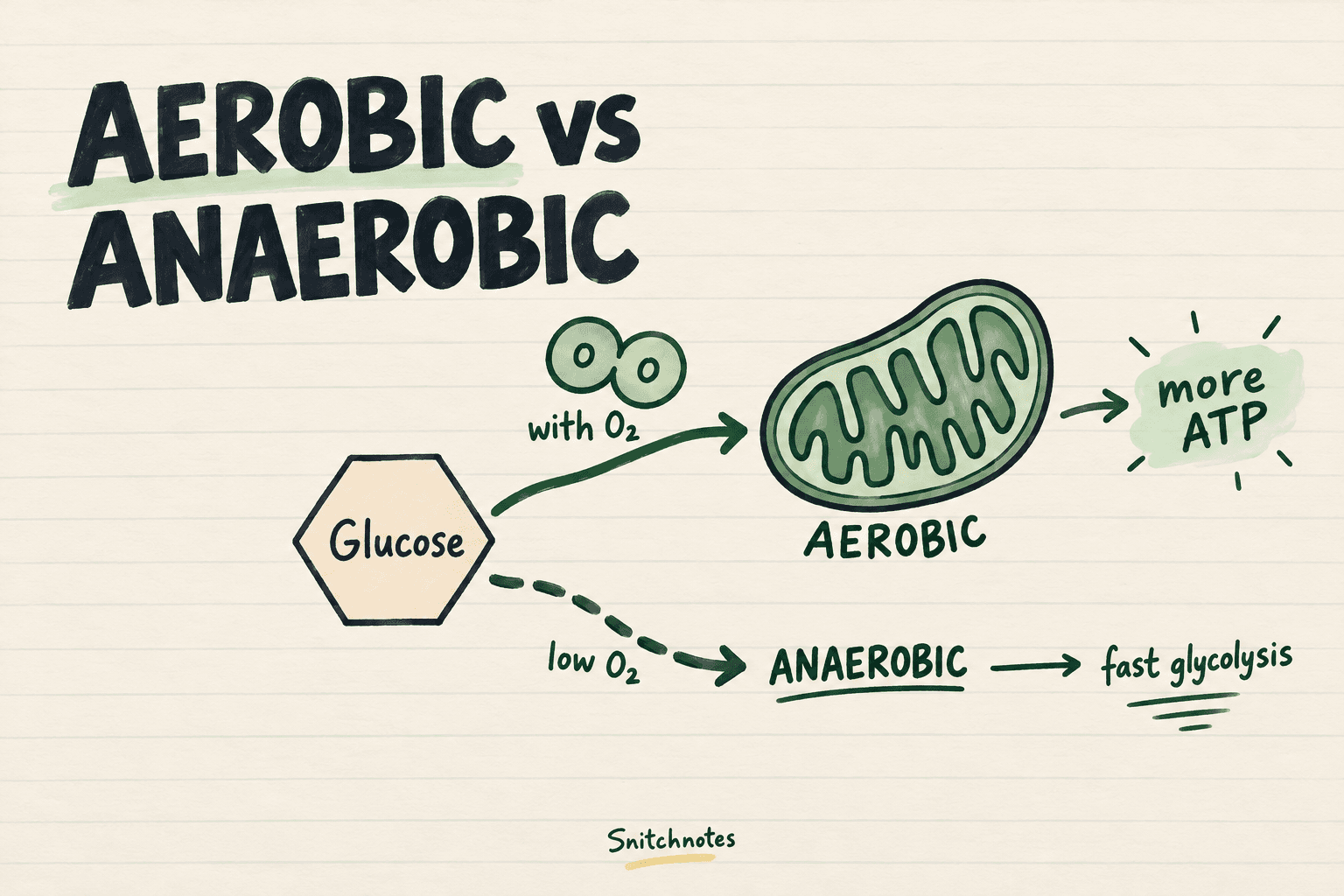
Aerobic respiration uses oxygen as the final electron acceptor and extracts much more energy from glucose: typically about 30–32 ATP per glucose in a eukaryotic cell, with carbon dioxide and water as the final products. In the human-muscle pathway often called anaerobic respiration, glycolysis continues without requiring oxygen, pyruvate is converted to lactate, and the net yield is 2 ATP per glucose. Both routes begin with glycolysis in the cytosol.
That difference matters because ATP is the cell's immediately usable energy currency. Aerobic respiration is slower to describe but highly efficient; low-oxygen glycolysis can supply ATP rapidly when demand rises faster than oxygen-dependent metabolism can cover it. The two systems are partners, not an on-off switch.
Aerobic vs anaerobic respiration at a glance
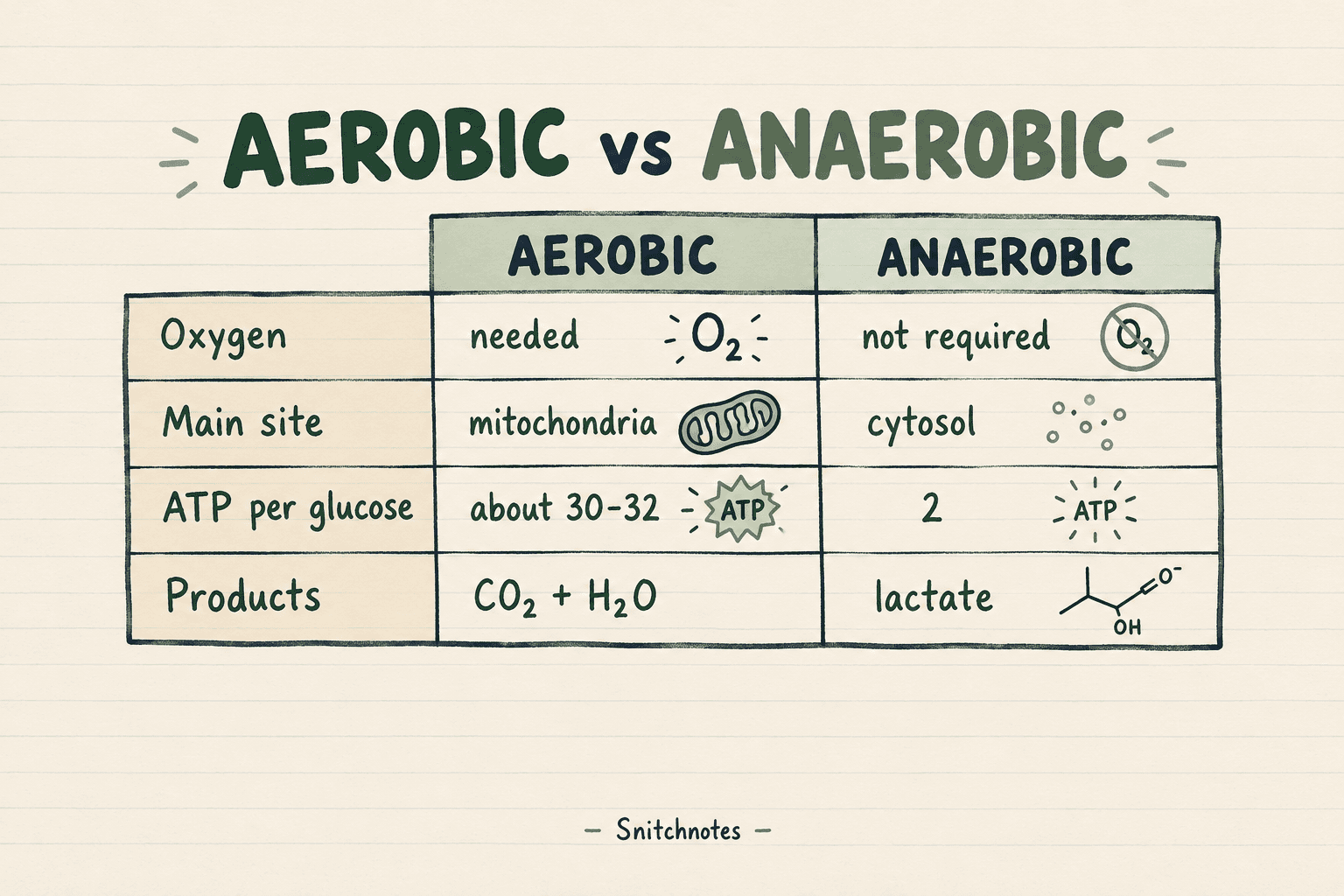
For a school-level comparison in human muscle, the most useful differences are oxygen use, location, ATP yield, and products. The word anaerobic here refers to glycolysis followed by lactate fermentation; a stricter terminology note appears later.
- Oxygen: aerobic respiration depends on oxygen at the end of the electron transport chain. Glycolysis and lactate formation do not directly require oxygen.
- Location: glycolysis happens in the cytosol in both cases. The later aerobic stages use the mitochondrial matrix and inner mitochondrial membrane.
- ATP yield: complete aerobic oxidation usually yields about 30–32 ATP per glucose in eukaryotic cells. Glycolysis alone produces a net 2 ATP per glucose.
- Products: aerobic respiration ultimately releases carbon dioxide and water. Human lactate fermentation produces lactate while regenerating NAD⁺ so glycolysis can continue.
Why oxygen changes the energy yield
Glycolysis splits one six-carbon glucose into two three-carbon pyruvate molecules. It earns a net 2 ATP and transfers high-energy electrons to NAD⁺, producing NADH. If oxygen-dependent mitochondrial pathways can keep going, pyruvate is oxidized, the citric acid cycle removes carbon as CO₂, and electron carriers deliver electrons to the electron transport chain.
Oxygen accepts electrons at the end of that chain and combines with protons to form water. Electron flow helps build a proton gradient across the inner mitochondrial membrane, which ATP synthase uses to make most of the ATP. Without a working final electron acceptor, that oxygen-dependent chain cannot keep oxidizing NADH at the required rate.
Lactate formation solves a smaller, urgent problem. It transfers electrons from NADH back to pyruvate, regenerating NAD⁺. That lets glycolysis continue producing ATP, but it adds no ATP beyond glycolysis's net 2. The low yield is the price of stopping before glucose is fully oxidized.
Example: one glucose molecule at rest and during a sprint
Imagine one glucose molecule entering a leg-muscle cell while you are sitting at a desk. Glycolysis in the cytosol converts it to two pyruvate molecules and nets 2 ATP. With oxygen delivery comfortably matching demand, most pyruvate enters mitochondria. Pyruvate oxidation, the citric acid cycle, and oxidative phosphorylation complete the aerobic route, bringing the total yield to roughly 30–32 ATP per glucose.
Now start a short, hard sprint. ATP demand rises almost immediately, while oxygen delivery and mitochondrial ATP production cannot jump to the new rate in a single instant. More glucose is pushed through glycolysis, and more pyruvate is reduced to lactate so NAD⁺ is regenerated quickly. Each glucose handled this way still yields only the 2 ATP from glycolysis, but ATP can be supplied at a high rate.
Aerobic respiration does not switch off during the sprint. Mitochondria keep working, phosphocreatine contributes too, and the relative contribution of each energy system changes with exercise intensity and duration. Afterward, lactate can be oxidized as fuel in tissues or converted back toward glucose through the Cori cycle; it is not simply metabolic waste.
Where each stage happens in the cell
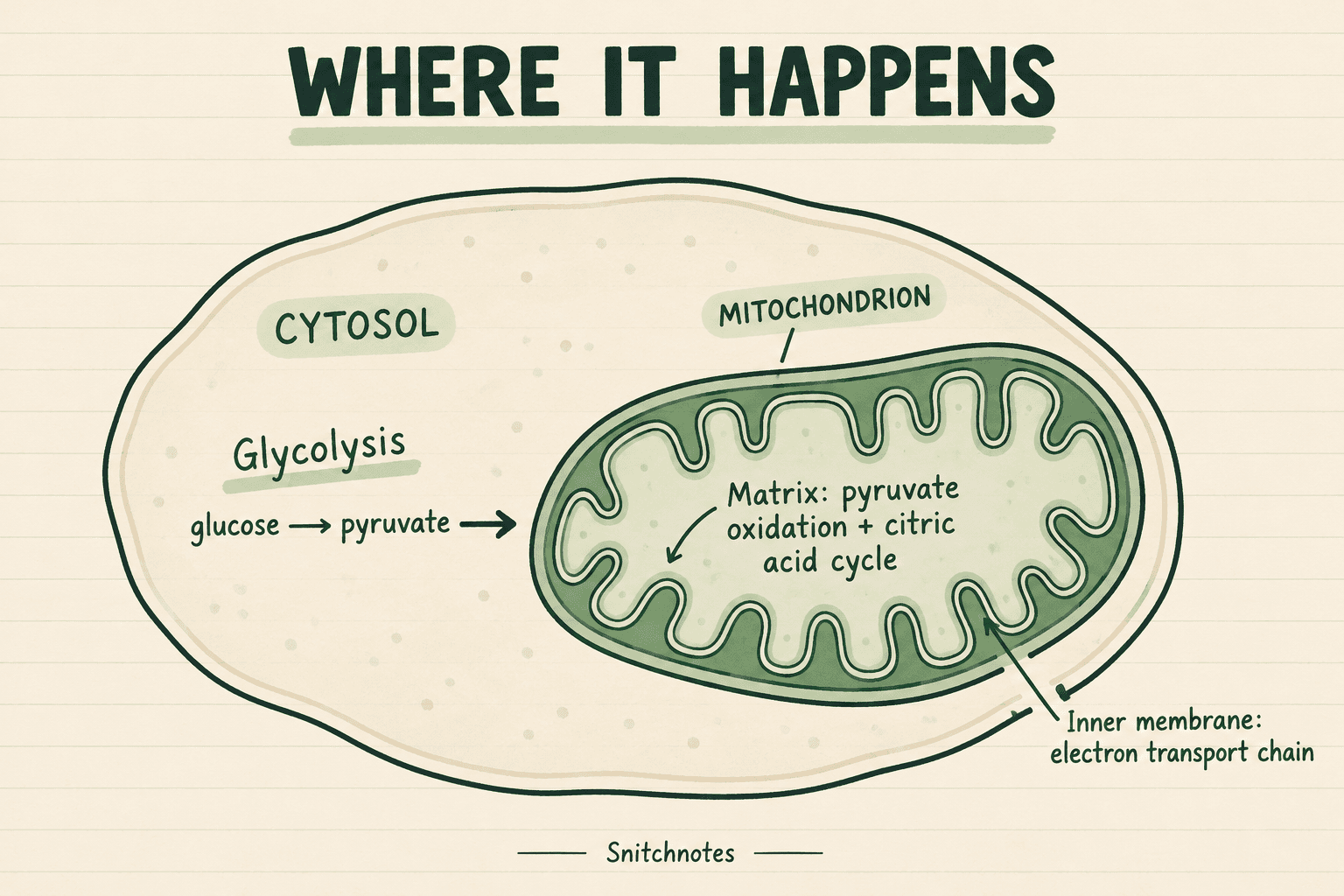
Glycolysis belongs to the cytosol, so it does not need a mitochondrion and occurs in both pathway summaries. In eukaryotic cells, pyruvate oxidation and the citric acid cycle occur mainly in the mitochondrial matrix. The electron transport chain and ATP synthase sit in the inner mitochondrial membrane, whose folds create a large working surface.
This location map is a better memory tool than treating the pathways as two isolated boxes: cytosol first, then mitochondrion if aerobic oxidation continues. Prokaryotes have no mitochondria, so their electron transport machinery is located in the plasma membrane instead.
The important terminology boundary
Many school courses use anaerobic respiration as an umbrella term for energy release without oxygen, including lactate fermentation in muscle. In stricter biochemistry, fermentation and anaerobic respiration are different. Fermentation does not use an electron transport chain; true anaerobic respiration does, but uses a final electron acceptor other than oxygen, such as nitrate or sulfate in certain microorganisms.
For an exam, follow the terminology used in your course, but explain the mechanism precisely. In human muscle under intense demand, the comparison is usually aerobic cellular respiration versus glycolysis plus lactate fermentation. Also avoid the old claim that lactate itself causes delayed-onset muscle soreness; that soreness develops later and is linked more closely to exercise-induced muscle damage and inflammation.
Check your understanding
Which stage occurs in both the aerobic and low-oxygen pathways?
Glycolysis. It occurs in the cytosol, splits glucose into pyruvate, and yields a net 2 ATP whether or not pyruvate later enters a mitochondrion.
Why does converting pyruvate to lactate help glycolysis continue?
The reaction oxidizes NADH back to NAD⁺. Glycolysis needs NAD⁺ to accept electrons, so regenerating it prevents that pathway from stalling when mitochondrial oxidation cannot keep pace.
Does a sprint use only anaerobic metabolism?
No. Phosphocreatine, glycolysis with lactate formation, and aerobic respiration overlap. Their relative contributions change with intensity and duration, but no single system owns the whole sprint.
Related concepts
- Sodium-potassium pump explained step by step
- How to study biochemistry
- ATP, NADH, and electron carriers: how cells transfer usable energy between reactions.
Sources
OpenStax Biology 2e: Glycolysis
OpenStax Biology 2e: Oxidative Phosphorylation
OpenStax Biology 2e: Metabolism without Oxygen
National Center for Biotechnology Information Bookshelf: Biochemistry, Anaerobic Glycolysis
Sports Medicine: Energy System Interaction and Relative Contribution During Maximal Exercise
講義をテスト対策バッチリの教材に。
ノート、クイズ、ポッドキャスト、フラッシュカード、チャット — アップロード1回で全部。
最初のノートを無料で試す